
Threats to the information system
Malware infection
Unauthorized access to confidential data
Unauthorized modification of the application software

Privacy Lock
Fast Contention

The solution provides reduced expenses for information security administration and personnel training, while ensuring high scalability and support for distributed infrastructures. It enables fast centralized security configuration in compliance with legal standards and unified client management for Windows and Linux systems.
About the product
Data Protection and Endpoint Security:
Protection of confidential information
Protection against intrusion and unauthorized actions of an attacker inside the system
Protection from insider actions
Protection against network attacks
Protection against information theft in case of media loss
Malware infection
Unauthorized access to confidential data
Unauthorized modification of the application software
Data theft by an external attacker
Data loss as a result of an attack by an encryption virus
Data leakage as a result of the actions of an internal intruder
Lateral movement of the attacker
Traffic interception
The spread of computer viruses




Our Products
Why Choose Crypto Code

Inventorization of file system objects. Track and manage all files and directories accurately.

Whitelist of executing applications. Allow only approved software to run for security.

Integrity control helps to be sure that the executing application was not changed.

Hardware integrity check detects any unauthorized change to the computer configuration.
Our Certifications
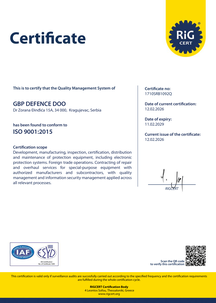
This is to certify that the Quality Management System of GBP DEFENCE DOO
View certificate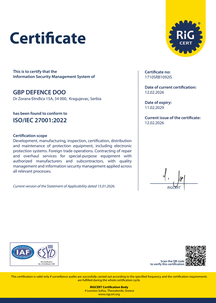
This is to certify that the Information Security Management System of GBP DEFENCE DOO
View certificate
How Do We Operate?
Cybersecurity protection safeguards systems, networks, and data from digital attacks, theft, and damage using security measures and technologies.
Cybersecurity compliance means following laws, regulations, and security standards that protect data, systems, and digital infrastructure from cyber threats. It ensures that organizations manage security risks in a structured and controlled way.
Ensure compliance by following regulations, conducting audits, training staff, maintaining documentation, and using security controls and monitoring tools.
Lack of compliance can result in heavy financial penalties, legal actions, operational restrictions, and loss of customer trust. In serious cases, organizations may face business suspension and management liability.
Common cybersecurity compliance frameworks include GDPR, ISO/IEC 27001, NIS2 Directive, PCI DSS, HIPAA, SOC 2, and national data protection laws.